Autocomplete made single-agent coding feel inevitable. Fleet-scale engineering will feel inevitable too — if coordination catches up to generation.
Try it. Run the with/without coordination demo, then inspect merge-replay and semantic impact on the failure modes research keeps finding.
More. Product mechanics in the territory map and leases episode, plus how we plug into existing fleets.
Phase one was generation
The last few years optimized tokens-to-code: better models, better tools, tighter IDE loops. That unlocked real productivity for one writer at a time. It also created a new failure mode when teams run many writers against one tree.
Phase two is coordination
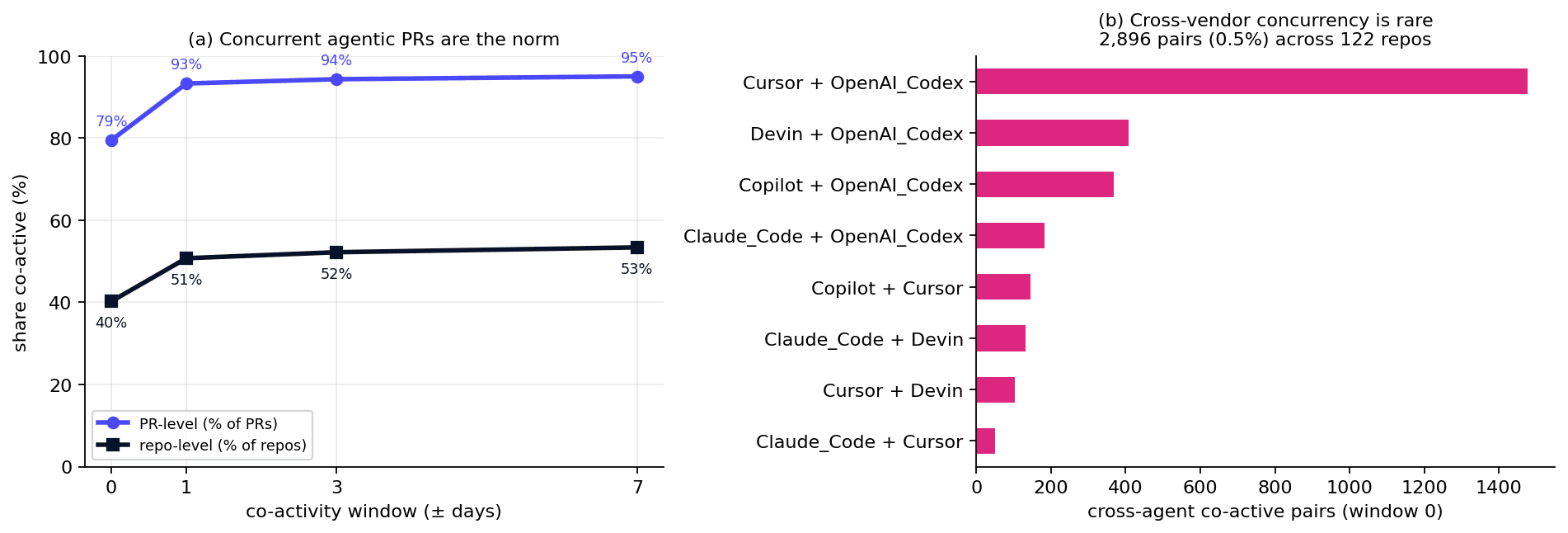
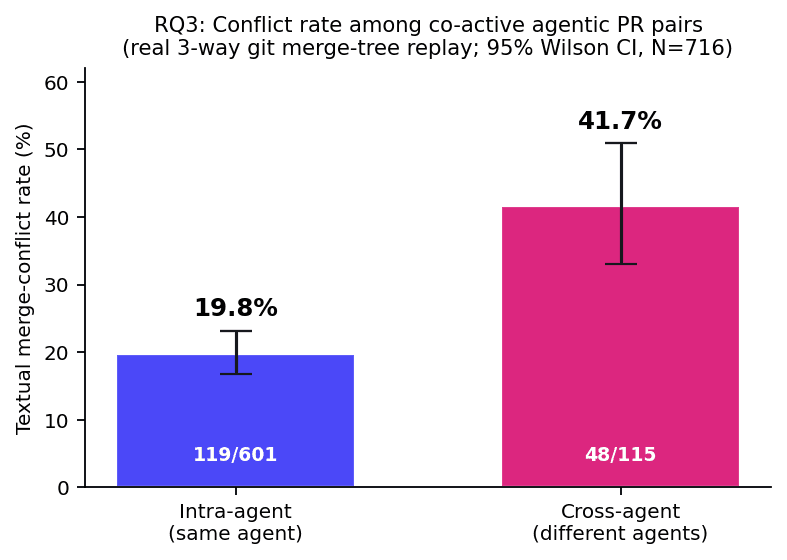
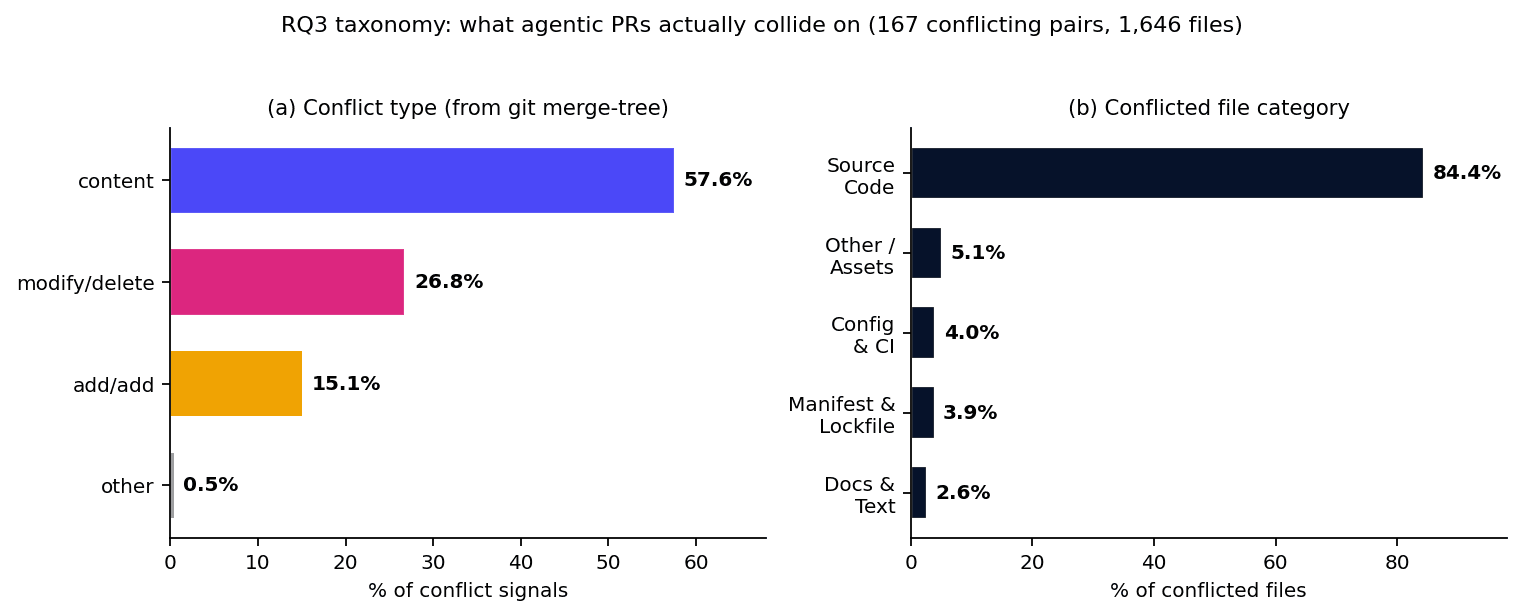
Concurrent agent PRs are already common on GitHub. When two agents work in overlapping windows, textual merge conflicts are not rare — including pairs whose authored file lists do not even overlap. Generation without coordination just accelerates the collision rate.
Leases as the primitive
Exclusive leases are how we make fleet scale boring. Claim paths before you edit. Release when you are done. Make waits visible. Pair that with a territory map and you have a control plane instead of a hope-based merge queue.
In Managent, the grant loop is sequential and idempotent: overlap math decides, the map updates, heartbeats keep claims alive. Optional scope prediction advises which paths to claim; it does not grant. Enforcement can start advisory and tighten without changing the coordination contract.
Merge-replay as ground truth
Research figures above come from the same family of check the product runs live: git merge-tree replay against co-active work. Leases reduce the chance two agents write the same lines; merge-replay tells you whether sibling branches still collide. Together they close the loop from intent to landable change — without claiming leases alone yield zero conflicts.
Fleet scale without freezes
The old answer to parallel risk was a code freeze. The agentic answer is finer-grained exclusion: freeze only the files under active claim, keep the rest of the tree moving. That is how release trains and autonomous refactors coexist.
What to try
- Reproduce the with/without gap on the coordination demo.
- Open merge-replay — the same merge-tree family as the figures above, on a live scenario.
- Check semantic impact for breakage that text-conflict rates undercount.
What we are building toward
Managent’s north star is landable work for real fleets on real codebases — laptop, CI, and cloud sharing one territory, with leases for turn-taking and merge-replay for verification. The research figures above are why we started. The product is how we intend to end the overnight conflict pile.
Ready to coordinate your fleet?